
I missed it
Two minutes of silence, a family history, and the uneasy feeling of not knowing what to do with either

I missed it.
Again.
Eight o’clock came and went, and somewhere in the Netherlands people stood still — in quiet streets, at monuments, in front of their televisions. Two minutes of silence.
Me? I was probably making tea, or scrolling, thinking, oh right… that.
Which is awkward, because I’m not someone who “doesn’t care.”
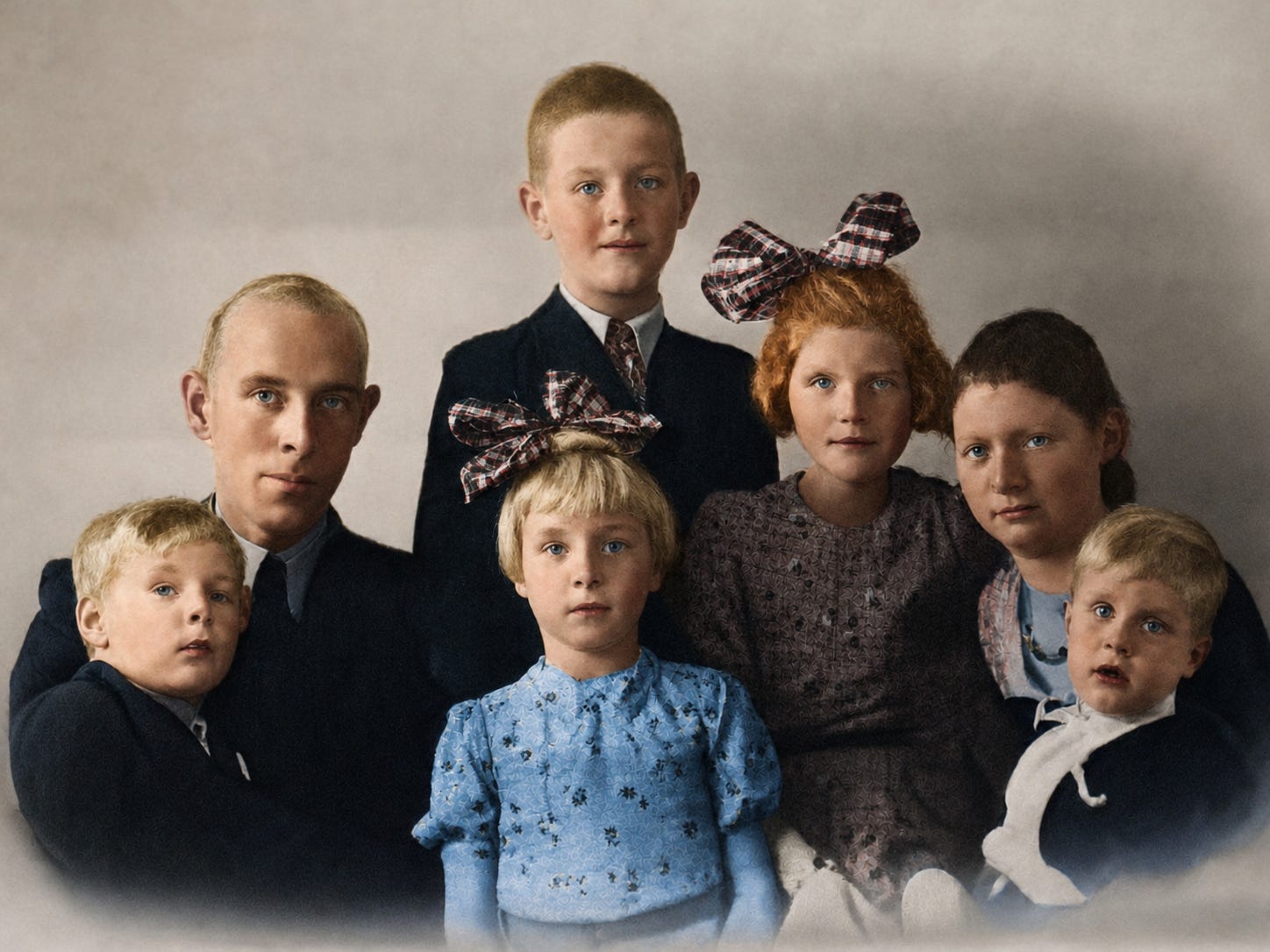
My family isn’t abstract history. It’s specific. Almost uncomfortably specific.
Great-uncles. One died at sea in the first days of the war. Another died from tuberculosis, worn down by lack of proper food. A grandfather died during the Hunger Winter … Great-uncles were taken during a razzia. One came back, but not really… what they would later call a camp syndrome.
And that was it.
No long stories. No detailed explanations. Just fragments. Facts. Silence around it.
So you’d think I’d be the kind of person who stands very still at eight.
But somewhere along the way, something shifted.
My parents are gone. They carried what couldn’t be said. My mother — a hunger child — didn’t need a national moment to remember. It lived in her. In her body. In small reactions. In what she never explained.
When they were there, remembrance had weight.
Now it feels… lighter. Or maybe just less held.
And here’s the uncomfortable part.
There is something almost relieving about that.
As if a quiet pressure has lifted.
As if I’m no longer required to step into a form that isn’t quite mine.
As if I can say: I know this. I carry this. I don’t need to prove it at eight o’clock.
And that feels free.
But not entirely right.
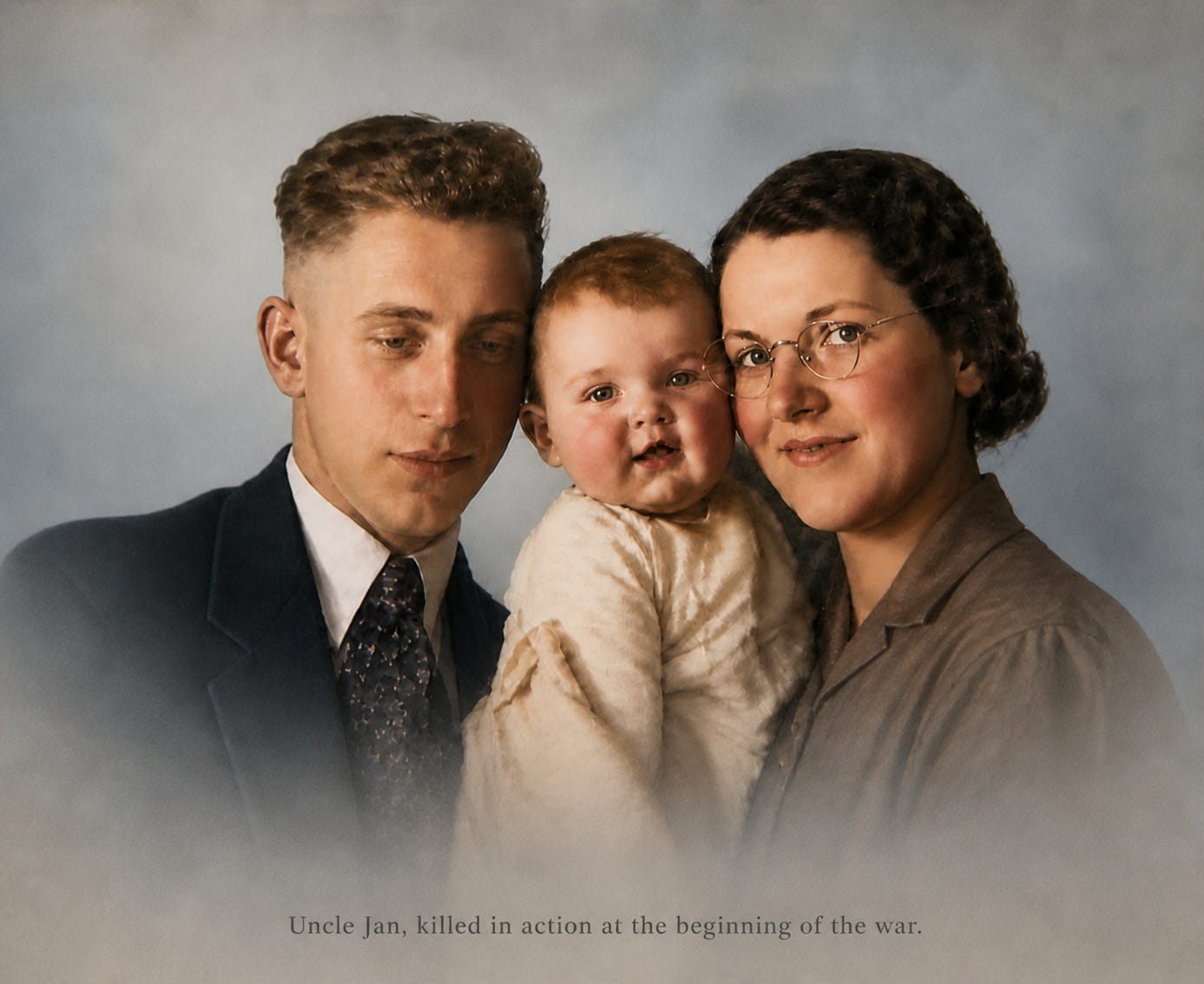
Because at the same time, there’s this other feeling. Not sharp, not accusing… just unease. Like something important slipped past without being marked.
Not because the ritual failed, but because I didn’t pause.
To quiet that feeling, or maybe to push it away, I open my grandmother’s wartime diary and read:
“This morning I was called to your father; he was dying. At ten o’clock he passed away. He never regained consciousness. I had still been with him on Saturday—I never imagined it would happen so quickly.
He will be buried in a rented coffin; once the family has left, he will be taken out again and laid in a mass grave.
A worker said that around a hundred people die each day in Rotterdam, almost all from starvation. Your father had received a note to report to an emergency hospital for examination… but now it is too late.
We have even less bread again; we receive only 400 grams per week. There is no food left at all.
From the Red Cross we receive half a loaf of bread each week, and sometimes a little oatmeal. For the children, and now and then for ourselves, a small piece of butter.
There is heavy fighting in our country. I find myself longing to hear something about Geertje. I have done what I believed was best for the children. Still, I would be so grateful to hear something from them.”
And that’s it.
Just my oma writing to her husband, forced to work in Germany, not knowing if her children are safe.
And then I look at the photos.
A girl with red hair. My mother.
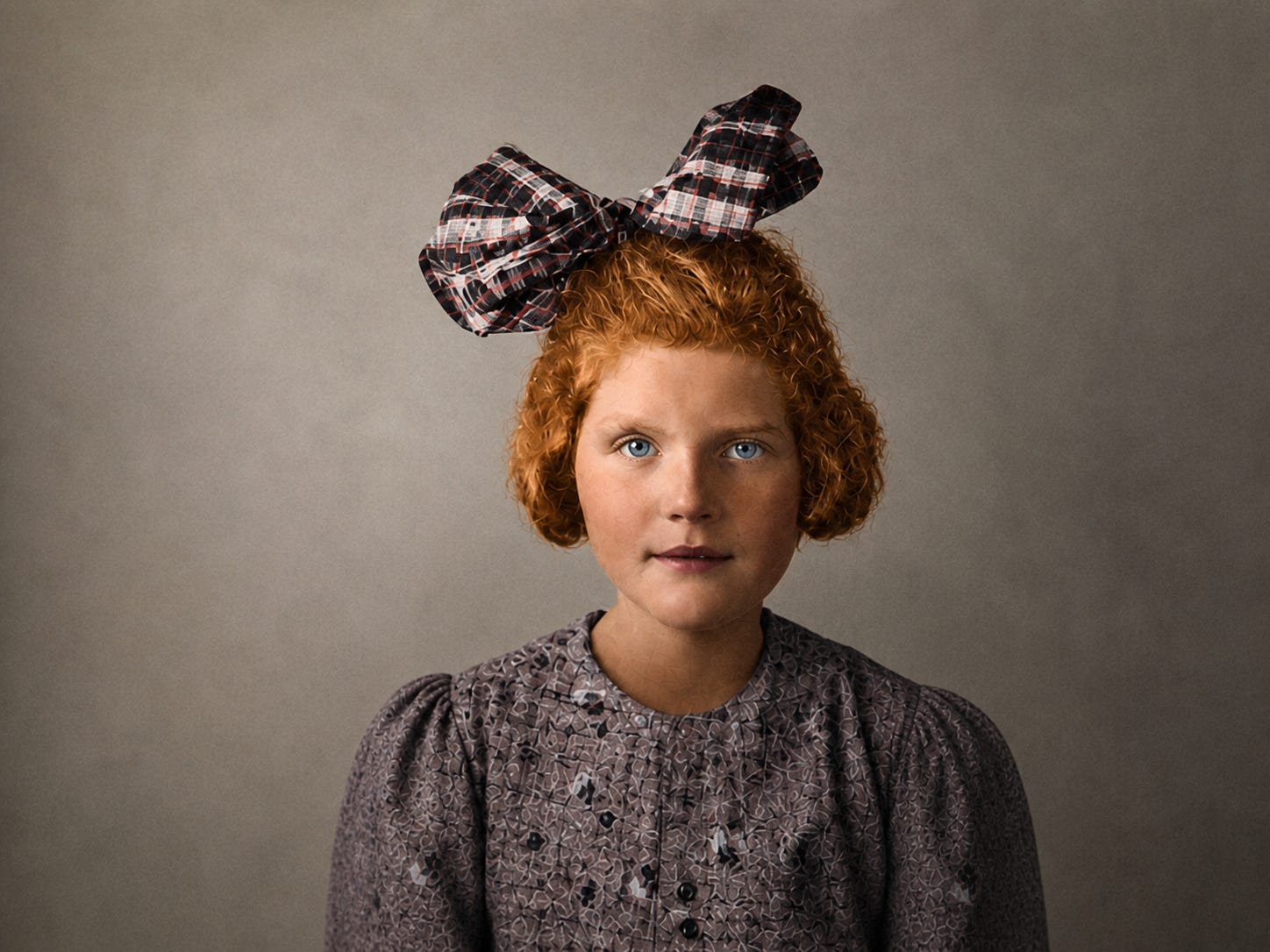
Not “history.” Not a category. Not a story you retell at the right moment.
A child. Somewhere else. Out of reach.
Driven away from her mother, to a place where there was food.
And a mother who had to let her go, believing it was the only way.
—
It doesn’t resolve anything.
If anything, it makes it harder.
It’s not that it no longer matters. It’s that I don’t quite know what to do with it anymore.
So it sits there, side by side:
Relief.
And unease.
Freedom.
And something that feels a bit like disloyalty… though I can’t even say to whom.
I don’t believe that two minutes of silence will change anything. I don’t believe it prevents what I see happening now, the flattening of history, the careless way people speak, the lack of understanding.
But apparently, I also can’t fully walk away from it.
So this is where I am:
Not convinced.
Not disconnected.
Not entirely at peace with either.
I’m not sure what to do with it.
So I carry it.
My heart cracked a little reading this. A history I cannot even imagine. We must remember. Thank you for sharing this story and also your feelings of unease about remembering.
This is heartbreaking, Rita. War's destruction extends far beyond the battleground. The hunger and the sending away of children...there are no words. I'm sad that your family had to experience such devastation. May the Lord continue to comfort your heart and give you wisdom in carrying your family's history as you move forward.